Brand-New Look at an Ancient System

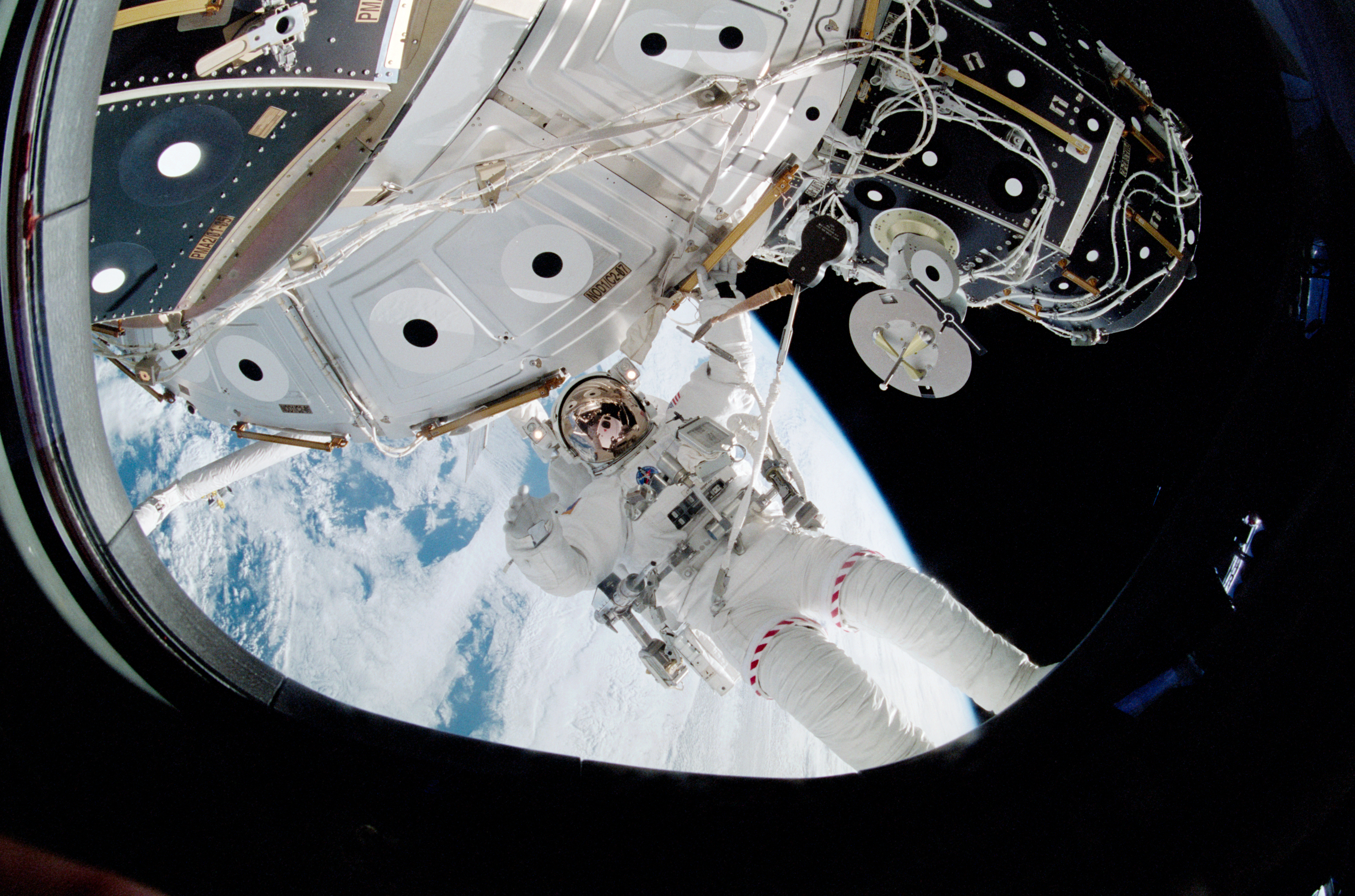
NASA Identifier: sts092-367-035 In the 21st century, for the first time, scientists are studying the workings of the eye’s ancient photoreceptor system, which evolved before vision. The origins of the nonvisual system possibly date back at least 500 million years. New research about the eye’s light-sensing system is driving high-precision light technology being designed for the International Space Station.

NASA Identifier: sts092-367-035
In the 21st century, for the first time, scientists are studying the workings of the eye’s ancient photoreceptor system, which evolved before vision. The origins of the nonvisual system possibly date back at least 500 million years. New research about the eye’s light-sensing system is driving high-precision LED light technology being designed to improve the health and safety of astronauts aboard the International Space Station.

Unlike the eye’s visual rods-and-cones system, which produces images, the nonvisual system provides a measure of environmental presence and intensity of light. It is composed of photosensitive retinal ganglion cells, which get their light-measurement abilities from a light-sensitive photopigment called melanopsin.

Melanopsin, not to be confused with melatonin or melanin (a pigment that gives color to skin and eyes), shows a peak sensitivity to short-wavelength blue light: the light that most readily activates the brain, suppressing melatonin — the chemical expression of darkness, as termed by pioneer melatonin researcher Russel J. Reiter — and preparing the body’s physiological and psychological systems for daytime activities.

In the 21st century, for the first time, scientists are studying the workings of this ancient photoreceptor system, which evolved before vision. Researchers believe the origins of the nonvisual system possibly date back at least 500 million years, to the branch of animal evolution featuring sea stars and sea urchins. But this photoreceptor system — discovered just over a decade ago, in 2002 — is so small that generations of scientists overlooked it during centuries of research on the eye’s visual processes.

“The discovery of a new sensory apparatus in the human eye after hundreds of years of careful research on the visual system serves as a reminder of how easy it is to miss critically important physiology,” neuroscientist George C. Brainard wrote in the 2005 research article “Photons, Clocks, and Consciousness” (Brainard, John P. Hanifin, Journal of Biological Rhythms).

Brainard, director of the Light Research Program at Thomas Jefferson University whose decades of research helped lead to the discovery of the eye’s nonvisual system, explained in the article that the science of human circadian phototransduction — the process in which light, via detection by the eye’s light-sensing system, is transformed into electrical signals for the brain — was still in its infancy. “Expanding the frontiers of this field will teach us how to better use light for the benefit of humanity,” Brainard wrote.

Brainard is playing a huge role in expanding those frontiers: The neuroscientist continues to work with NASA in developing light for long-duration space travel, including the International Space Station.

One Big Ticking Clock

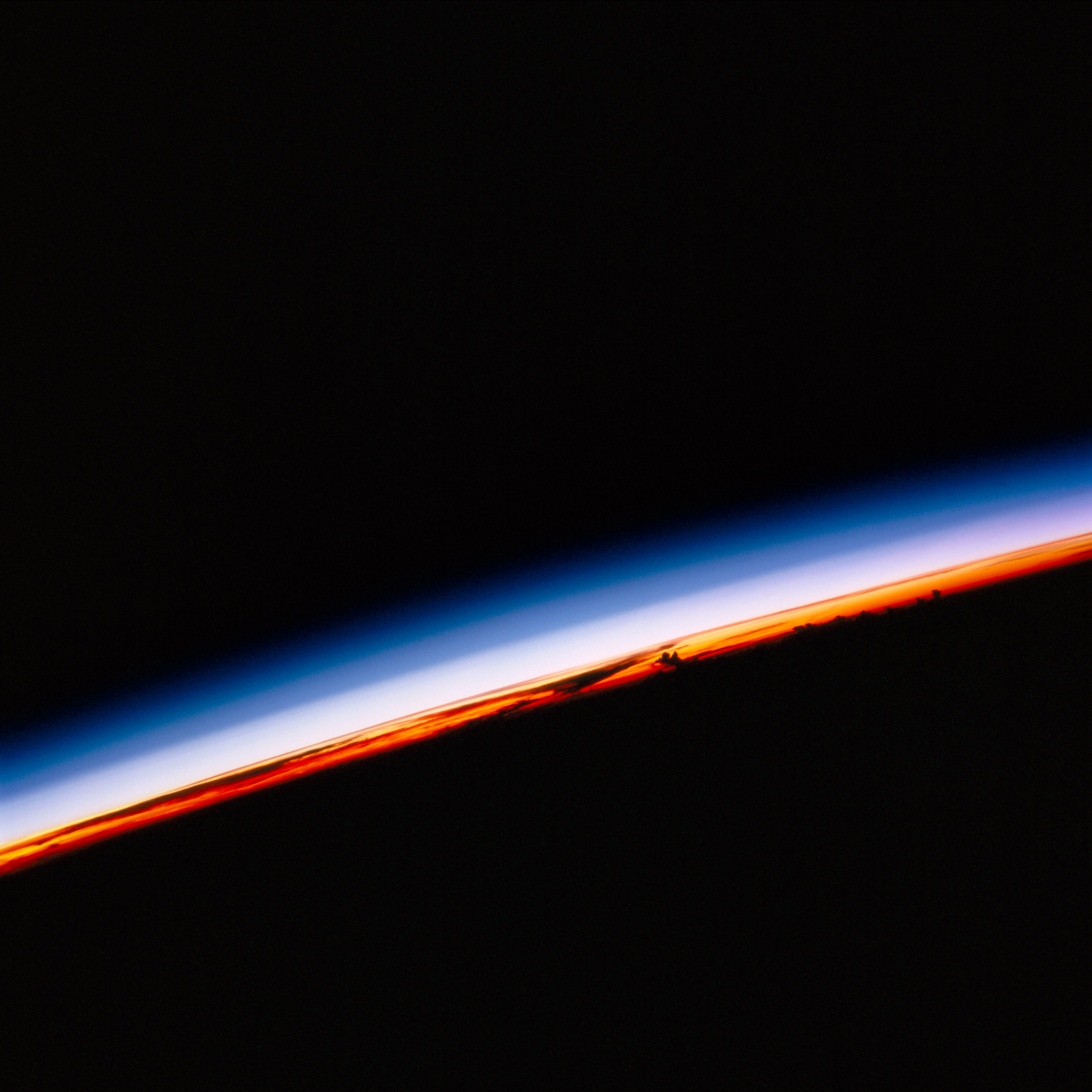
NASA Identifier: globe_east Life on Earth evolved in a natural dark-light cycle. Light is an absolutely fundamental part of our biology. And light, as detected by the eye’s remarkable nonvisual light-sensing system, is the most important environmental time cue for resetting our circadian clocks.

NASA Identifier: globe_east
Life on Earth evolved in a natural dark-light cycle. Light is an absolutely fundamental part of our biology. And light, as detected by the eye’s remarkable nonvisual light-sensing system, is the most important environmental time cue for resetting our circadian clocks.

Light, circadian neuroscientist Steven W. Lockley has explained to me, is a fundamental component of our biology. We need the daily 24-hour light/dark cycle to stay properly synchronized with the world around us. Light, Lockley says, is the most important environmental time cue for resetting our circadian clocks each and every day. That’s why the workings of the eye’s nonvisual light-sensing system are so important.

Light travels to the brain’s 24-hour clock, housed in an area of the brain called the suprachiasmatic nucleus. The SCN is made up of about 50,000 cells, each of which is an individual oscillator, or clock. Together, these cells work to control our physiological and behavioral functions that affect, among many things, alertness, performance and reaction times, heart rate, temperature, glucose and insulin levels, and many genes. Lockley explains that the clock naturally runs at a period close to, but not exactly 24 hours (on average about 12 minutes longer, or 24.2 hours), and has to be reset to 24 hours each day by light.

In recent years, researchers have also discovered circadian clocks in the body’s tissues and major organ systems — the heart, the lungs, the liver, the stomach, the ovaries, the pancreas and many more, which, Lockley beautifully details, act as members of the body’s orchestra, keeping time in the peripheral tissue but under the guidance of the conductor in the SCN.

Essentially, the body is one big ticking clock: For the human machine to run as smoothly as possible, we need properly timed exposure to environmental light. In an ideal world, we would be on natural Earth time, resetting slightly differently each day and through the seasons, not on our constant clock time.

A Sci-fi-esque Light-Sensing System

NASA Identifier: iss002-702-085 On Earth, we experience one sunrise and sunset in a 24-hour day. But in a flood of the full spectrum of light, International Space Station crews see about 16 sunrises and sunsets in that same time frame. This sunrise view was taken by the Expedition Two crew in 2010.

NASA Identifier: iss002-702-085
On Earth, we experience one sunrise and sunset in a 24-hour day. But in a flood of the full spectrum of light, International Space Station crews see about 16 sunrises and sunsets in a 24-hour period. This sunrise view was taken by the Expedition Two crew in 2010.

The light sensitivity of the eye’s daytime color vision system evolved later than nonvisual light detection systems and so is not optimized for detecting light to reset the brain’s master circadian clock. On the visible light spectrum, the sensitivity of the three-cone photopic visual system peaks in the mid-wavelength green range, at 555 nanometers. But the nonvisual system contains the photopigment called melanopsin, which has a peak sensitivity at 480 nanometers in the short-wavelength blue range.

In animal models, and studies of different types of blindness, if the visual rods-and-cones system was removed from the cell layers of the eye, or is non-functioning, the nonvisual system works perfectly fine on its own, sending clock-setting light to the brain.

While there is some interaction, circadian neuroscientist Steven W. Lockley explains, the visual and non-visual photoreceptor systems can function independently and have their own photoreceptors, neural pathways and effects on the brain.

It’s crucial that we understand human physiology and our complex relationship with light given how important light is to sleep, circadian rhythms, and health. The eye’s nonvisual retinal system — a sci-fi-esque mechanism of which ophthalmologists largely remain unaware 13 years after the system’s discovery — represents a distinct photoreceptor systems with its own photopigment, neural pathway and function from the photoreception system that we use to see.

Neuroscientist George C. Brainard, director of Thomas Jefferson University’s Light Research Program, was one of the first scientists to study the effects of light wavelength on circadian photoreception. In 2001, his was one of two laboratories that made the major finding about the human eye: the melatonin suppression response — one of the non-visual responses to light — had a peak sensitivity in the blue light range that did not match the light sensitivity pattern of the rods and cones used to see.

Earlier work had shown that total visual blindness did not change circadian light responses, but these papers (Brainard et al., 2001; Thapan et al., 2001) provided more formal functional evidence of a non-rod, non-cone photoreceptor in the human eye.

This discovery, coming on the heels of colleagues’ research showing that the mammalian eye contains a light sensor separate from the visual rods-and-cones system, set up neuroscientist David Berson’s monumental finding in 2002: the mystery photoreceptor and a light-sensitive molecule called melanopsin, discovered in 1998 in the camouflaging skin cells of the African clawed frog, were one and the same.

Unfortunately, the conversation about light wavelengths gets stuck on the short end of the spectrum. It is true that the eye’s nonvisual light-sensing photoreceptor system is most sensitive to short-wavelength blue light, but as Lockley explains, all visible light can affect circadian rhythms. Any light source after dusk can be considered unnatural, including the light necessary to do shiftwork but also the light inside our homes, such as from TVs, cellphones, computers, and other electronic devices, which keeps us awake at night and disrupts our sleep and circadian rhythms.

Light after dusk, as relayed by the eye, tells the brain it’s daytime. And if the brain thinks it’s day, not night, it will induce daytime physiology as it thinks that we are awake at the wrong time. Consequently, light at night shifts the clock, suppresses melatonin, increases heart rate and temperature and alerts the brain — all of which are associated with daytime in a day-active species like humans.

But short-wavelength blue light — a stimulant, as opposed to relaxing, long-wavelength yellow/red light at the far end of the visible light spectrum — is also medicinal light. It can be used to improve alertness, reset disordered clock rhythms, or alleviate seasonal depression.

It’s the natural color of a brilliant, midday sky pouring in through the windows of assisted-care facilities for the elderly, improving patients’ moods, sleep, and cognitive symptoms of dementia.

And it’s a crucial component of the LED lighting wavelength model being tested for the International Space Station.
Space Station Twilight Zone

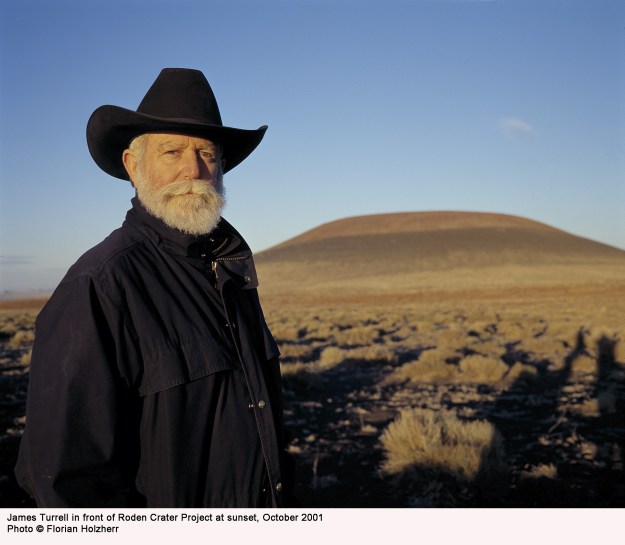
NASA Identifier: iss002e5413 Night and day don’t exist on the International Space Station, where astronauts live in the equivalent of a twilight zone: Repeated exposure — or lack of exposure — to the wrong wavelengths of light at the wrong time disrupts their biological clocks and circadian rhythms. Still, the views are beautiful: This sunset view with the space station’s solar array in the frame was taken by the Expedition Two crew in 2010.

NASA Identifier: iss002e5413
Night and day don’t exist on the International Space Station, where astronauts live in the equivalent of a twilight zone: Repeated exposure — or lack of exposure — to the wrong wavelengths of light at the wrong time disrupts their biological clocks and circadian rhythms. Still, the views are beautiful: This sunset view with the space station’s solar array in the frame was taken by the Expedition Two crew in 2010.

The International Space Station orbits the Earth every 90 minutes, creating incredible photography opportunities for astronauts who see approximately 16 sunrises and sunsets in a 24-hour period. Night and day don’t exist on the space station, where astronauts live in the equivalent of a twilight zone: Repeated exposure — or lack of exposure — to the wrong wavelengths of light at the wrong time throws their biological clocks out of whack and disrupts their circadian rhythms. The astronauts are cut off from the natural light-dark cycle and therefore have to create their own.

Astronauts typically only get about six hours of sleep in a 24-hour period due to a number of factors, including circadian misalignment. They suffer from insomnia and fatigue: dangerous conditions in space where they are required to work slam shifts — the performance of critical, time-specific operations, such as docking. Sleep loss can severely impair the astronauts’ cognitive functions within a few days, increasing the risk of mission errors and putting their health and safety at risk.

So electric light is coming to the astronauts’ rescue to help with both circadian misalignment and providing an acute stimulant to reduce fatigue in the form of a programmable LED wavelength system being designed and tested by a specialized lighting team of neuroscientists and NASA engineers.

The LED lighting system being designed for the space station will far exceed the sophistication of the aging fluorescent lights now in place. The lighting system is scheduled to be installed in phases, starting in fall 2016 in the U.S. crew quarters and eventually expanding to the entire U.S. module of the space station.

Image courtesy of NASA This educational LED lighting model was prepared to illustrate the full-color spectrum of light that the new, programmable system will provide astronauts — a system that will allow for greater lighting control with the manipulation, or fine-tuning, of color wavelengths.

Image courtesy of NASA
This educational LED lighting model was prepared to illustrate the full-color spectrum of light that the new, programmable system will provide astronauts — a system that will allow for greater lighting control with the manipulation, or fine-tuning, of light’s wavelengths.

No, says neuroscientist Steven W. Lockley, the new LED lights (above) won’t really resemble disco lights. The new, programmable system will provide greater lighting control with the manipulation, or fine-tuning, of the wavelength and intensity of light to either stimulate, when alertness or circadian resetting is required, or not stimulate, for example prior to sleep, the circadian photoreception system. A system of multiple LEDs, he explains in talks, can produce thousands and thousands of combinations of light.

As a countermeasure for fatigue and circadian disruption, and to improve vision, health, safety, and performance, the astronauts will actually see variations of white light, designed to enhance or minimize stimulation as required.

The Rocket Science of Better Light

Photo courtesy of NASA Electric light is coming to the astronauts’ aid in the form of a programmable LED wavelength system. U.S. Astronaut Mike Fincke holds an early prototype of an LED lighting unit that was installed on the space station during Expedition 18 about six years ago.

Electric light is coming to the astronauts’ aid in the form of a programmable LED wavelength system. U.S. Astronaut Mike Fincke holds an early prototype of an LED lighting unit that was installed on the space station.

To work in conjunction with the eye’s nonvisual system, the International Space Station’s high-precision LED lighting system will offer three main settings:

1) high alertness (blue-enriched light): suppresses melatonin, accelerates the shifting of the circadian clock, and boosts reaction times and performance.

2) general illumination: a bright and full spectrum of evenly distributed light — like that of daytime — improves visibility and maintains alertness and cognitive function.

3) pre-sleep, or bedtime (red-enriched white light): de-emphasizes blue light and promotes relaxation and sleep.

The lighting is being designed to help the astronauts relax, sleep, awaken feeling refreshed, and quickly shift their body clocks to better handle dangerous unpredictability in a line of work where one wrong move can mean mortal disaster.

The lights are designed to provide the right light at the right time, from blue-enriched alerting light in the morning, to lighting to maintain good vision during the working day, and then a blue-depleted and lower intensity light before bed to help relaxation and facilitate sleep.

Circadian neuroscientist Steven W. Lockley explains that along with the new lighting, we also need a new way to measure light as the current standards and meters are concerned only with light for vision. Light meters — along with current industry lighting standards — are attuned to the peak light sensitivity of the eye’s daytime color vision system.

The field is designing new ways to describe light so that the nonvisual benefits are also captured, Lockley says, allowing lighting designers and architects to start to incorporate the benefits of light into their designs. The spectral fingerprint of all lighting design should be based on optimizing both the visual and nonvisual benefits of light.

Safety-sensitive occupations, such as those found in the law enforcement and military fields, can benefit from this technology as well. Submarine crews, for example, just like astronauts, lack access to natural light-dark cycles.

A research article published in Acta Astronautica (George C. Brainard, et al., 2012, “Solid-state lighting for the International Space Station: Tests of visual performance and melatonin regulation”) describes the future of lighting.

As the article details, the development of specialized lighting for long-duration space exploration “will ultimately revolutionize how our public facilities, work places and homes are illuminated in the coming decades. … By refining multipurpose lights for astronaut safety, health and well-being in spaceflight, the door is opened for new lighting strategies that can be evolved for use on Earth.”

Everywhere electric light is used, Lockley says, we can do a better job of it. We’re only at the start of understanding what this photoreceptor system does. And as the general public becomes aware of the multipurpose lighting being developed for astronauts, he predicts an explosion in the availability of LED technology on Earth.

NASA Identifier: 259129main_ISS015E18958_full As researchers have written, the development of specialized lighting for long-duration space exploration is helping to open the door for new lighting strategies that can be evolved for use on Earth. The workings of the LED lighting system being developed for the International Space Station hold tremendous implications for myriad lighting applications on Earth.

NASA Identifier: 259129main_ISS015E18958_full
As researchers have written, the development of specialized lighting for long-duration space exploration is helping to open the door for new lighting strategies that can be evolved for use on Earth. The workings of the LED lighting system being designed and tested for the International Space Station hold tremendous implications for myriad lighting applications on Earth.

The Texture of Light

Regardless of the language in which it’s described, James Turrell’s light speaks to us at the most primal level. This 2009 YouTube video with English subtitles beautifully captures the spirit of a similar experience I had at The Museum of Fine Arts, Houston. The late Markus Brüderlin leads us through a Turrell Ganzfeld light installation at the Kunstmuseum Wolfsburg in Germany, describing this Ganzfeld as a “room of light that has no outlines.” He continues: “ … The climax of this development, of liberating light from its source, and letting it spread freely throughout a room, that’s the essence of James Turrell.”

On a Friday afternoon in August 2013, I sat on a community bench inside The Museum of Fine Arts, Houston, waiting to climb a short pyramid of stairs and enter an unknown space filled with unknown light. I came here trying to grasp the essence of James Turrell, the revolutionary light installation artist who speaks of the “thing-ness” of light and whose radical work demands surrender to the evolving and provocative colors of light presented within the powerful presence of space.

I came here chasing ideas of light and how best to share them with a world separated from light’s color-driven wavelengths. But as I quietly waited in a long, narrow room, there was a feeling of marking time at a train station, a feeling that I was preparing to embark on a one-way journey. A feeling that as I slipped on disposable white booties, I might not ever again wear my empty shoes. A feeling that after experiencing just two of seven light installations composing the exhibition “James Turrell: The Light Inside,” I was already hopelessly lost, in a profoundly joyful and sorrowful way.

In the first installation I entered, with effects produced by a computerized, multicolor LED light system, I watched a figure of light take shape. Hues of purple, indigo, and sky blue engulfed me. I felt certain, that if allowed, I could touch the texture of what my mind called an apparition of pulsating, beckoning light. At the entrance for the third installation, two museum docents stood sentry atop pyramid steps, offering forearms to guests as if guiding them through a portal to another world.

Come. Rise. My group ascended the steps. Our white-bootied feet carried us over the threshold, into quivering pink light, into what looked to be a rectangle of color. Room. The word sounded strange, like a definition that had nothing to do with this incalculable space. We stepped into the effect of Ganzfeld, a German word meaning “complete field” and referring to a loss of depth perception, a dissolving of visual boundaries. In his writings, Turrell describes the experience as like stepping into light. There’s no up, no down, no left, no right. One small scuff from a shoe could disturb the sequence of colors. Light spilled evenly across the vast floor, slipping up the curved bottoms of walls, sliding back down from the ceiling, flowing like an endless waterfall.

Curves met as friends, not sharp-angled strangers. We were swallowed by a seemingly limitless field of light.

A woman who entered the room in the group before me stood motionless, facing me, her mouth agape. She stared at me, and beyond me, toward the door’s threshold and space from whence I just climbed, her concrete expression stirring concern that perhaps I was about to be consumed by an unseen wave, or a lion. Turn around, she told me. I turned, slammed by radiant color. Green. Not emerald green, not forest green, not jungle green, not olive green, but green, rich, fathomless, and deliciously knowable, like an original thought, like a fruit first tasted, like a color just invented. Green. The green filled the doorway, like rising smoke. I turned back around, toward the open space. The floor sloped down ever so slightly, away from the doorway, toward a back wall: a pool of ocean-blue light.

My lungs felt full of light, as though they might burst. I longed to stretch my arms high over my head, arch my neck and shoulders, and dive backward into the infinite blue. The light changed, again and again. The green faded, and I wondered if it was ever really there.

Outside the museum, as I walked to my car, I opened my eyes wide to the natural light. I found myself chasing a new idea: I, too, can choose my relationship with light. All light. Light that reveals, heals, and opens my mind and spirit to the global community that surrounds me.

Confronting Ancient Light

James Turrell casts a long shadow in the art world, and no project is bigger than that of his Roden Crater: an ancient, non-active volcanic crater in the Arizona desert which he is converting to a naked-eye observatory. Michael Govan writes in the book James Turrell: A Retrospective, “In some parts Roden Crater is an architectonic camera obscure, rendering the image of celestial bodies like the sun or moon within spaces we inhabit—bringing outside light inside.”

James Turrell casts a long shadow in the art world, and no project is bigger than that of his Roden Crater: an extinct volcanic cinder cone in the Arizona desert he is converting to a naked-eye observatory. As Michael Govan writes in the book James Turrell: A Retrospective, “In some parts, Roden Crater is an architectonic camera obscura, rendering the image of celestial bodies like the sun or moon within spaces we inhabit—bringing outside light inside.”

Light, as controlled by revolutionary light installation artist James Turrell, becomes something tangible we can touch, something we feel with mind, body, and spirit that pulls us to our higher purposes. Turrell doesn’t experiment with light. His work is light, interacting with us in precisely made spaces that isolate the light and allow us to form relationships with it as a physical presence.

In October 2013, I scored a front-row seat to hear the internationally famous Turrell address a standing-room-only crowd of architecture students and faculty at The University of Texas at Austin. Midday sunlight flooded the ballroom, pouring in through floor-to-ceiling windows and bouncing off Turrell’s thick head of white hair.

I listened, transfixed, as Turrell spoke of a lifetime love affair with light. Now 72, he’s in a race against time to complete one of the most enormous art projects ever tackled: the conversion of the Roden Crater, an extinct volcanic cinder cone, into a naked-eye observatory that draws natural light into underground chambers and tunnels.

Turrell remains focused on his vision of what he calls confronting ancient light: of creating spaces inside the Roden Crater where people can look into parts of the universe that cradle stars older than our solar system.

I, like those around me, fell under Turrell’s spell as his soft, kind eyes swept the room, drawing us into his description of human beings’ relationships with light. We resemble crustaceans, he said, inhabiting these shells we construct. Like hermit crabs playing musical chairs, we move around and within our mobile and immobile shells — vehicles, homes, work places — generally oblivious to how we’re connected, and disconnected, to light.

Turrell described the heart of his work, of creating holes in our shells, whatever they might be, to set the light free. I looked around at people sitting on the edges of their seats. I wasn’t the only one moved. We were all on the same wavelength. At talk’s end, I and hundreds of other people would have followed James Turrell anywhere, coming out of our shells, and into the light.

Light, as Turrell is oft quoted, is not so much something that reveals as it is itself the revelation. Light is.

Watch an exquisitely made short film about James Turrell’s magnum opus, the Roden Crater, at http://vimeo.com/67926427. The film, commissioned by The Los Angeles County Museum of Art, was produced in conjunction with the “James Turrell: A Retrospective” exhibition held from spring 2013 through spring 2014 at the museum. The exhibition, held concurrently with similar ones at the Guggenheim Museum in New York City and The Museum of Fine Arts, Houston, formed a comprehensive retrospective of Turrell’s art career. To learn more about Turrell’s revolutionary work with light, go to http://jamesturrell.com, http://jamesturrell.com/about/reviews, and www.lacma.org/james-turrell-in-the-press.

Watch an exquisitely made short film about James Turrell’s magnum opus, the Roden Crater, at http://vimeo.com/67926427. As commissioned by The Los Angeles County Museum of Art — which provided both photos for display on this page — the film was produced in conjunction with the “James Turrell: A Retrospective” exhibition, held from spring 2013 through spring 2014 at the museum. The exhibition, held concurrently with similar ones at the Guggenheim Museum in New York City and The Museum of Fine Arts, Houston, formed a comprehensive retrospective of Turrell’s art career.

To learn more about Turrell’s revolutionary work with light, go to:
http://jamesturrell.comhttp://jamesturrell.com/about/reviews, http://rodencrater.com/james,
and 
www.lacma.org/james-turrell-in-the-press.