A Native Plant Paradigm Shift

Bill Neiman on native prairie restoration: “People can rebuild this,” he says. “All is not lost.”

Bill Neiman on native prairie restoration: “People can rebuild this,” he says. “All is not lost.”

Cover_Oct15_smallOver the past two years, I’ve gotten to know Bill Neiman: a man of sunlight and soil who likes dirt, not asphalt, beneath his feet. My profile of Neiman, his family, and their Native American Seed farm operation appears in the October 2015 issue of Texas Parks & Wildlife magazine.

My story aims to bring into sharp focus the connections between native habitat, the management of water, and the sustainability of wildlife.

Seated northeast of Junction at the intersection of nine of Texas’ 11 ecoregions, Native American Seed (www.seedsource.com/Default.asp) specializes in the harvest and sale of wildflower seeds and prairie grasses native to those regions and the Texas-Oklahoma-Louisiana bioregion. As the most easily recognized of Native American Seed’s operations, the West Texas farm itself, as a research laboratory for seeds harvested at off-site locations, provides the best examples of how native habitat sustains wildlife.

Within the Texas-Oklahoma-Louisiana bioregion, so much of the native vegetation upon which ecosystems depend is gone. But trying to move such a complex issue into mainstream consciousness is a tough sell, Neiman says. Generally speaking, city dwellers who spend most of their lives on concrete don’t consider the full implications of what’s being lost as urban development creeps farther into the countryside.

It’s an issue that will be front and center tomorrow, Thursday, Sept. 24, at the Hill Country Alliance’s Annual Leadership Summit in Fredericksburg (see my related blog post “Protecting the Hill Country’s Resources” at https://thelightoftheroad.com/category/hill-country-alliance/). Neiman, who sits on the HCA’s board of directors, will be in attendance, along with many other conservationists.
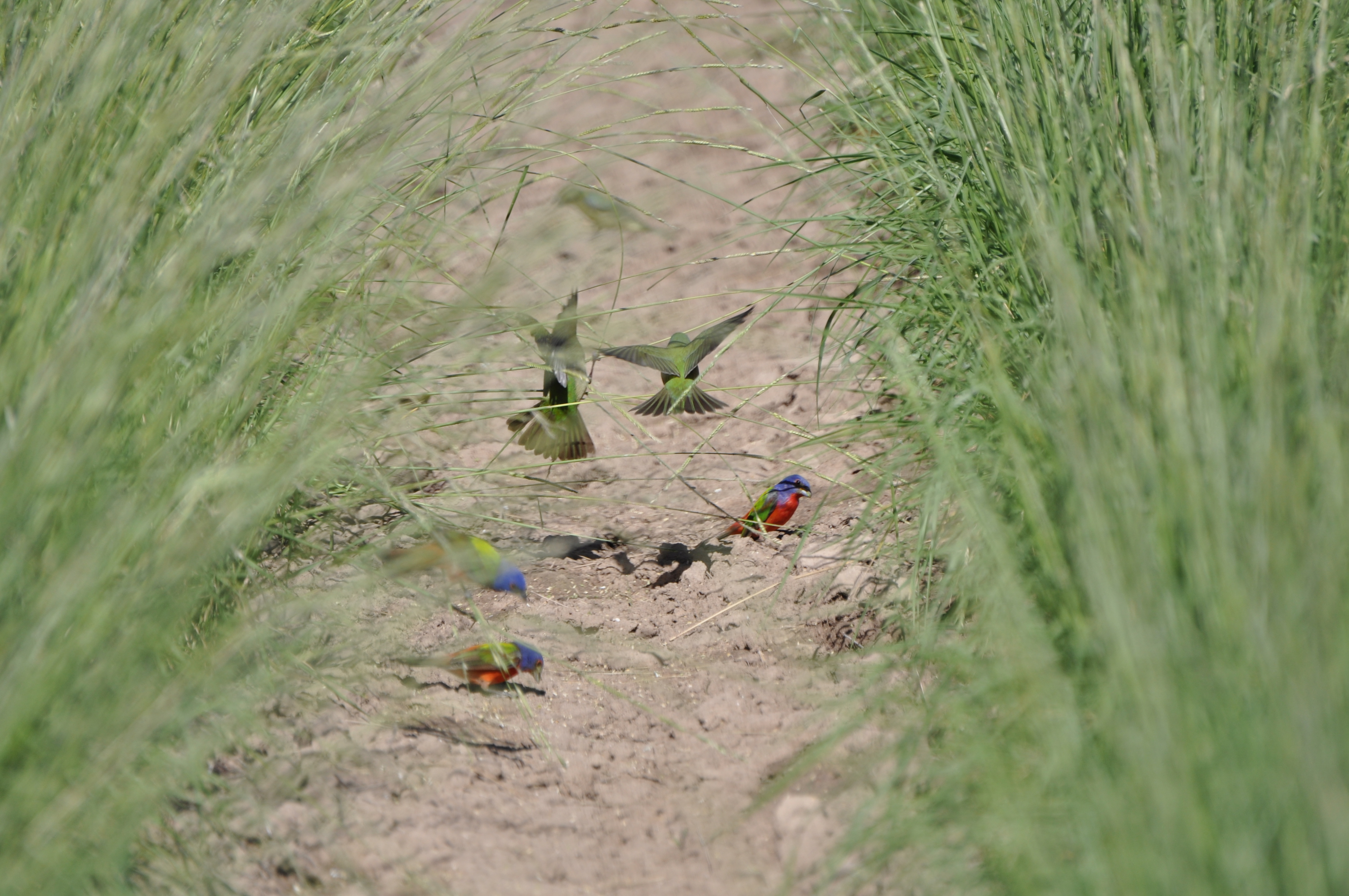
Photo credit: Native American Seed

Photo credit: Native American Seed

The balance between native crops and wildlife on the Native American Seed farm teaches us the right questions to ask. Instead of asking “Where has all the wildlife gone?” we should be pondering: “Where have all the native grasses and wildflowers gone?”

Case in point at Native American Seed: During the extreme drought conditions of 2011, clouds of painted buntings (above) descended on rows of Texas cupgrass (Eriochola sericea), surviving on the nutritious seeds of this tall grass that has almost been grazed to extinction.

Milkweed varieties grown on the farm provide nectar and breeding habitat for migrating monarch butterflies, whose numbers are dropping at an alarming rate.

The American Basketflower (Centaurea americana, as seen below) that’s growing successfully on the farm is a common, but relatively unknown, pink-bloomed pollinator for bees and butterflies. This healthful nectar wildflower favored by many native pollinators while in bloom offers large, nutritious oily seeds for songbirds, quail and turkey later in its life cycle.

Photo credit: Native American Seed

Photo credit: Native American Seed

The entire Neiman family, along with 21 full-time employees, is involved in Native American Seed’s daily operations: Bill’s wife, Jan, oversees business administration; their daughter, Emily, a marketing and public education specialist, coordinates the production of fall and spring seed catalogs; their son, Weston, handles long-range projections; and George Cates, Emily’s partner, specializes in landowner consultations, research and educational public speaking.

But the Native American Seed story is much bigger than what happens on the Neiman family’s 63-acre farm. And the story of Bill Neiman and Native American Seed is best visualized in seeds: millions and billions of seeds primarily harvested during large-scale tall-grass harvests in the fall. Weston Neiman, the farm’s 26-year-old special projects coordinator, estimated that the 2014 fall harvests — conducted in the Lost Pines, Pineywoods, Coastal Bend and Blackland Prairie regions — yielded 6.25 billion little bluestem (Schizachyrium scoparium) grass seeds: almost one seed for every person on the planet.

For more than a quarter century, Neiman, now 61, has been bringing value to native plants, encouraging landowners and homeowners — anyone with a patch of ground — to read the land: to understand where they live and what grew there, natively, 150 years ago without human interference. He teaches that the fundamentals of restored native prairie lie beneath the surface, where root systems act like sponges, holding water and slowly releasing it back to aquifers, rivers, and other plants.

Any landowner, Neiman says, can build basins of swales and berms that create a stair-stepping, self-irrigating system of water. It’s good, he says, to create depressions — old-fashioned mud puddles — in one’s own yard, just as he did as a 5-year-old playing beneath the gigantic horse apple trees in his family’s rural Dallas backyard. As Neiman croaks in his familiar, fired-up voice, “Gee, that’s where the butterflies hang out! That’s where the frogs go! The earth worms!”

Neiman’s work circles back to water, and the healing of native habitats, time and again. In June, two weeks after catastrophic Memorial Day weekend flooding on the Blanco River claimed lives, destroyed homes and crumpled centuries-old bald cypress trees, a host of entities including Native American Seed, the Hill Country Alliance, The Nature Conservancy, the Texas A&M Forest Service, the Hays County Master Naturalists, the Meadows Center for Water and the Environment, and the Texas Parks and Wildlife Department partnered to hold riparian recovery workshops in Wimberley and Blanco.

The workshops epitomized Neiman’s vision: Any ecosystem, no matter how badly damaged, can be ecologically restored.

Neiman wrestles with his own philosophical question: Are we behaviorally qualified to receive a restored environment? The answer, he says, hinges on instilling a code of land ethics in the hearts and minds of young people. For a paradigm shift to occur, it will fall upon the next generation to plant new seeds of ecological restoration.

“People can rebuild this,” Neiman says. “All is not lost.”

The Native American Seed farm serves as a research laboratory, with seeds harvested from off-site locations growing in fields protected by scarecrows wearing straw hats and colorful, long-sleeve shirts.

The Native American Seed farm serves as a research laboratory, with seeds harvested from off-site locations growing in fields protected by scarecrows wearing straw hats and colorful, long-sleeve shirts.
Protecting the Hill Country’s Resources

Photo courtesy of Hill Country Alliance The Hill Country Alliance’s outreach covers a lot of ground in a region encompassing 17 counties, 11.4 million acres, and more than 3 million people. It’s an outreach that honors the special beauty of the Hill Country — a magical, mystical place, says HCA Executive Director Christy Muse. But the preservation of this special beauty for future generations requires the kind of long-range planning that pays extra heed to land conservation in connection to water availability. Muse explains: “In all of our water discussions, there’s very little attention being paid to the land, and everything that happens on the land has everything to do with the water.”

Photo courtesy of Hill Country Alliance
The Hill Country Alliance’s outreach covers a lot of ground in a region encompassing 17 counties, 11.4 million acres, and more than 3 million people. It’s an outreach that honors the special beauty of the Hill Country — a magical, mystical place, says HCA Executive Director Christy Muse, shown above. But the preservation of this special beauty for future generations requires long-range planning that connects land and water conservation.

I’m looking forward to attending the Hill Country Alliance’s Annual Leadership Summit tomorrow, Sept. 24, in Fredericksburg (

Click to access Summit-Flyer-2015.pdf

). The summit — titled “A Vision for the Hill Country” — is placing a sharp focus on the region’s most critical resources: water and land.

The Hill Country Alliance’s outreach covers a lot of ground in a region encompassing 17 counties, 11.4 million acres and more than 3 million people. It’s an outreach that honors the special beauty of the Hill Country — a magical, mystical place, says HCA Executive Director Christy Muse.

But the Hill Country’s natural resources are under attack, Muse notes, threatened by prolific population growth and a lack of oversight for development outside city limits. Most alarmingly, the aquifer recharge zones and spring-fed streams and rivers that make up the region’s diverse water-supply system can accommodate only so many drinking straws before they run dry.

The fragmentation of rural land into smaller chunks for residential and commercial development puts more pressure on a water system repeatedly, and historically, stressed by drought. Something has to give. So Muse and a broad-based team of experts are asking residents, new and established alike, to give more than they take: to understand the limitations of the region’s water resources and to grasp the connection between the pumping of groundwater and the lowering of the underground water table.

In a recent conversation, Muse explained how she’s framing the main issues: “Everyone in the Hill Country ultimately wants prosperity and quality of life for future generations,” she says. “No one would argue about that.”

But Muse says concerns about water threaten that future in many ways. In conversations about water — the availability of water, the price of water, the quality of water — Muse is noting a glaring omission. “There’s very little attention being paid to the land, and everything that happens on the land has everything to do with the water,” she says. “The water’s the burning issue.”

To that end, Muse envisions a regional land-use plan that features large areas of protected land, such as heritage ranches, with a passenger rail transit system enhancing the vibrancy of tourist locales such as Fredericksburg and Kerrville.

“If you think outside the box,” Muse says, “there’s so much possible.”

Good land planning, Muse continues, necessitates innovative thinking that places less stress on the land, thereby protecting water resources. It involves developing away from sensitive river, or riparian, areas. It means developing in a low-impact manner that doesn’t require massive infrastructure, such as mazes of new roads and big pipelines. It involves creative strategies such as rainwater harvesting and the use of gray water (reusable wastewater) on lawns.

Cover_Oct15_smallIt means growing drought-resistant native plants — see my related story about native plant guru Bill Neiman and his family’s Native American Seed farm operation in the October 2015 issue of Texas Parks & Wildlife magazine. And I share a little more of Neiman’s vision in my blog post “A Native Plant Paradigm Shift” (https://thelightoftheroad.com/2015/09/23/a-native-plant-paradigm-shift/).

The ultimate idea, Muse says, is to take a holistic view of the entire Hill Country region and the links between the natural systems in place.

In terms of development, “What I really oppose is just letting whatever happen, happen, with an attitude of ‘Oh, well, there’s nothing we can do about that,’ ” says Muse, who grew up in Riverside, Illinois, a planned, walkable community of open green spaces designed by the legendary landscape architect Frederick Law Olmsted. “That’s unacceptable. There are things we can do. We have a responsibility.”

“The Trip to Mars Starts Right Here”

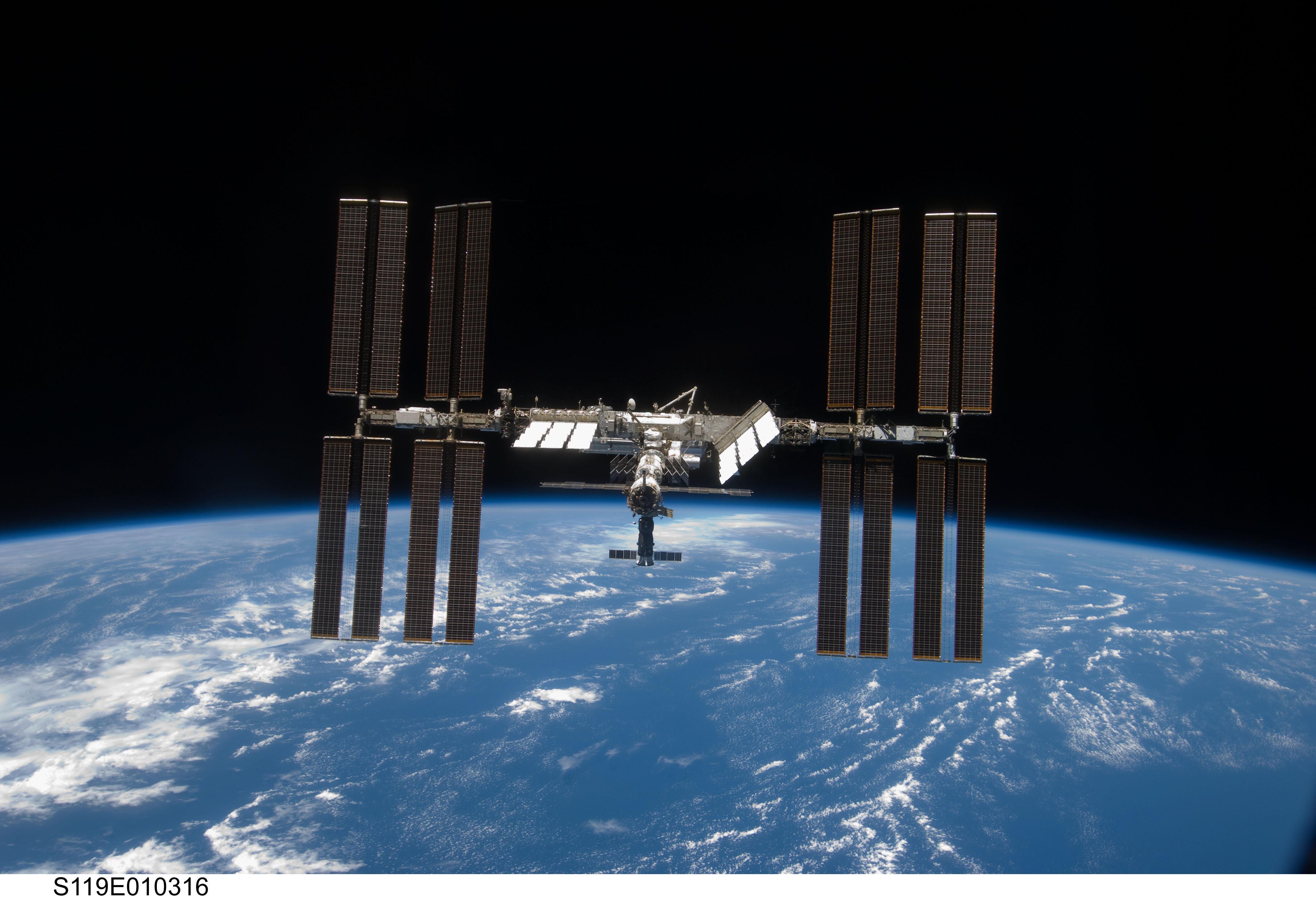
NASA’s One-Year Mission in progress aboard the International Space Station is focused on manned deep-space missions beyond low Earth orbit: namely, a trip to Mars.

As explained in this NASA video, research being conducted on the space station will help physicians, scientists, and engineers better understand how to protect the human crews who will someday make the journey to the Red Planet.

“It’s a fabulous destination for us to explore,” Jim Green, director of NASA’s Planetary Science Division, says in the video. “It has so many scientific questions that we could answer, and it might actually be the first place where we find life beyond the atmosphere of our own Earth.”

The historic One-Year Mission revolves around NASA astronaut Scott Kelly and Russian Federal Space Agency cosmonaut Mikhail Kornienko, whose one-year mission of living and working on the space station began on March 27.

Tests under way on the space station involve myriad health concerns, such as fluid shifts into the chest and head, including fluid shifts suspected of negatively impacting vision; the loss of muscle and bone strength; and the psychological effects of spending months in space in cramped, isolated quarters.

The One-Year Mission is also studying how long-duration weightlessness affects fine motor skills and sleep — and how Kelly and Kornienko will re-adapt to the Earth’s gravity.

“Humankind is not going to limit itself with just near-Earth orbit,” Kornienko says in the video via English translation. “We need to explore new planets, our solar system. It is inevitable. And the one-year mission is the first step in that direction.”

A Well-Traveled Road, and Light

Thanks for the lift, Joel Meyerowitz!

joelmeyerowitz2014's avatarONCE MORE AROUND THE SUN

Lift

This road is one we have walked on almost every day for the last few years. The land rolls and dips and changes color with the seasons and the light. Some days it has a piercing blue sky and on others it is rain soaked and leaden, or rain bowed and glorious, and it never fails to lift my spirits. I salute it by raising the camera in acknowledgement, and saying thank you.

08-20 land L1032567.

View original post

“Slash of Light”

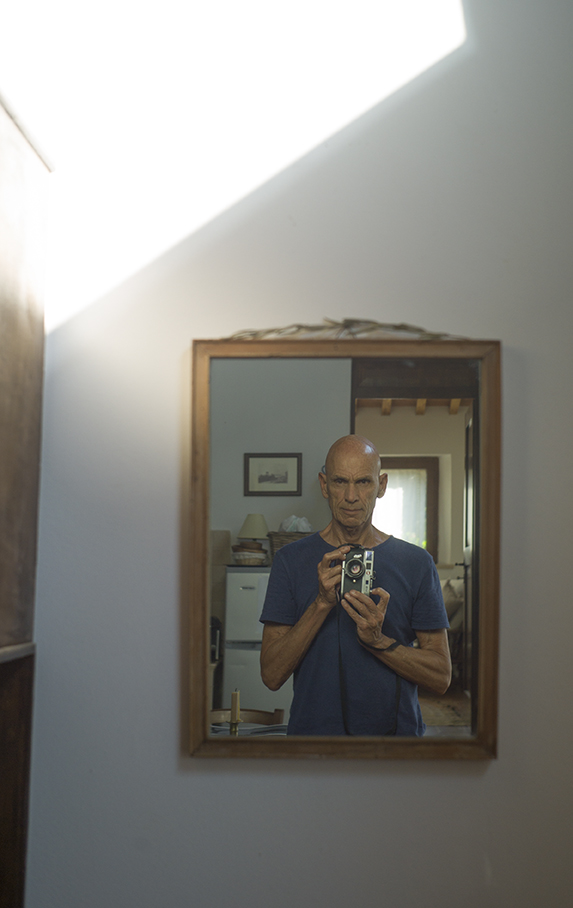
Reflections of light, and of one’s self, from photographer Joel Meyerowitz …

joelmeyerowitz2014's avatarONCE MORE AROUND THE SUN

Self Portrait

I was walking through the living room when this slash of light caught my attention. It dissolved the wall in a way that made the mirror’s rectangle, and the space within it, part of the graphic energy of the place, with the doorways and windows behind. And there I was; looking into the image and suddenly a self portrait suggested itself.

I don’t make a lot of self portraits, or I haven’t for many years, and seeing myself there, on the first year of living in Europe, I sensed that it was time to record who I was at that moment, and perhaps make more of them now and then so that at this age, (75) I could watch myself in the process of aging, just to see how it all turns out.

08-18 Joel L1032526

View original post

Brooding Clouds, Changing Light

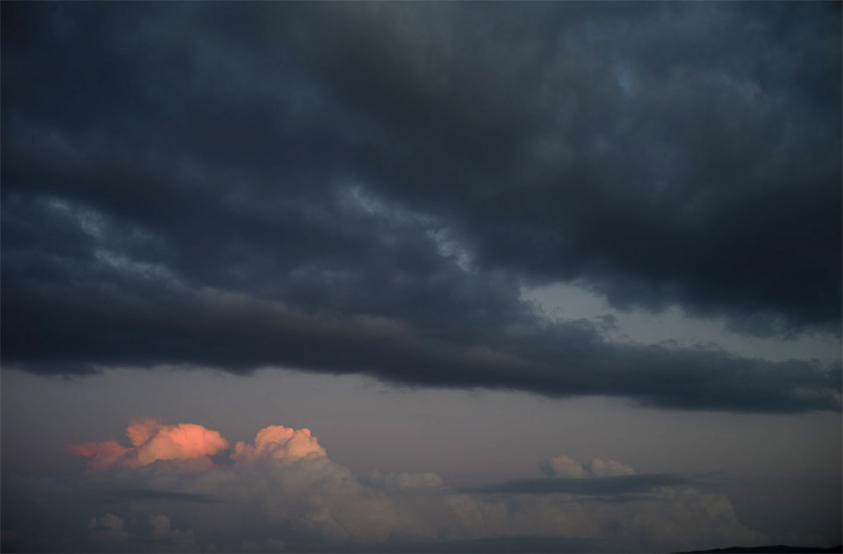
Brooding clouds, changing light … beautiful. From renowned photographer Joel Meyerowitz and his blog Once More Around The Sun: A photograph every day for a year.

joelmeyerowitz2014's avatarONCE MORE AROUND THE SUN

Wonder

Just sitting at a friend’s dinner table watching the oncoming dusk slowly draining the light of the day. A long meditation on change. Light, gliding from the fullness of white clouds to the saturated last licks of color at their tops, and then, right before my eyes, it’s gone, like a magician showing his trick and we not being able to see it – that’s magic!  Not seeing the change while looking at it.

Nature is the magician beyond measure, and every day the phenomena of light shows us such variety and delicacy as to fill our hearts with wonder or joy.

07-29 Sky L1032031 copy

View original post

Twin Studies on Twin Astronauts

With all eyes on eventually sending human crews to Mars, NASA’s One-Year Mission provides a rare opportunity to conduct parallel studies on identical twin astronauts: “one twin flying and one twin on the ground,” Craig Kundrot, deputy chief scientist of NASA’s Human Research Program, explains in this NASA video.

As detailed by the Human Research Program, the investigations conducted on twin brothers Scott and Mark Kelly — Scott is flying a one-year mission on the International Space Station, and Mark is being observed on Earth — “will provide NASA with broader insight into the subtle effects and changes that may occur in spaceflight as compared to Earth-based environments.”

NASA’s Human Research Program, at www.nasa.gov/twins-study/reseach, details the four main research areas on which a total of 10 investigations on the identical twin brothers are being focused:

  • Human physiology: These investigations will look at how the spaceflight environment may induce changes in different organs like the heart, muscles or brain.
  • Behavioral health: This investigation will help characterize the effects spaceflight may have on perception and reasoning, decision making and alertness.
  • Microbiology/Microbiome: This investigation will explore the brothers’ dietary differences and stressors to find out how both affect the organisms in the twins’ guts.
  • Molecular/Omics: These investigations will look at the way genes in the cells are turned on and off as a result of spaceflight; and how stressors like radiation, confinement and microgravity prompt changes in the proteins and metabolites gathered in biological samples like blood, saliva, urine and stool.

Lettuce Get Ready for Mars

Space to Ground, as narrated by NASA Public Affairs Officer Dan Huot, provides fascinating weekly video updates about life aboard the International Space Station, including that of NASA’s One-Year Mission and research focusing on the effects of long-duration spaceflight on the human body.

The first highlight from this August 14 video illustrates how food grown in space — red romaine lettuce, in this case — will someday supplement the diets of human crews traveling to Mars. The video also details a Russian spacewalk outside the station and describes the differences between the U.S. and Russian spacewalking suits: American astronauts don their two-piece suits much like regular clothing. Cosmonauts crawl into their suits through a hatch in the back.

The historic One-Year Mission began on March 27 when NASA astronaut Scott Kelly and Russian Federal Space Agency cosmonaut Mikhail Kornienko were launched to the space station aboard a Russian Soyuz capsule.

In a U.S./Russian partnership, Kelly and Kornienko were each chosen to serve a yearlong mission in space — the longest mission assignment ever for an NASA astronaut. Research results of what happens to the space travelers’ bodies during this record-setting spaceflight will help NASA scientists and engineers better understand how to plan for even longer human missions to an asteroid and, eventually, Mars.

According to NASA, it typically takes robotic missions about eight months to travel to Mars. Officials are exploring ways to get human crews to Mars more quickly, but right now, it is projected that an overall mission duration would roughly range from one to three years.

With the goal of improving the health and safety of astronauts on long-duration spaceflights, the space station’s One-Year Mission is examining the physical, cognitive and psychological effects of such space travel, factoring in stress, isolation, fatigue, altered light-dark cycles, and the condition of microgravity, in which bones and muscles weaken.

Meanwhile, as reported by the New York Times, Kelly will have broken two American records when he returns to Earth next year: the longest single trip to space and the longest cumulative time in space. And Russian cosmonaut Gennady Padalka, the current commander of the space station who flew with Kelly and Kornienko on the Soyuz capsule, has already claimed the record for total days spent in space.

Upon his scheduled return to Earth in September, Padalka will have spent a total of 878 days in space, surpassing the previous mark of 803.4 days by Russian cosmonaut Sergei Krikalev.

Space travel records prior to Expedition 44, the current International Space Station mission (www.nytimes.com/live/international-space-station-launch/breaking-space-records):

  • Longest single trip to space: 437.7 days, Valeri Polyakov, Russia. January 1, 1994 to March 22, 1995, to the Russian space station Mir.
  • Longest cumulative time in space: 803.4 days, Sergei Krikalev, Russia (six spaceflights).
  • Longest single trip to space for a NASA astronaut: 215.4 days, Michael López-Alegria, Sept. 18, 2006 to April 21, 2007, to the International Space Station.
  • Longest cumulative time in space for a NASA astronaut: 381.6 days, Michael Fincke (three spaceflights)

Chasing Van Gogh’s Light

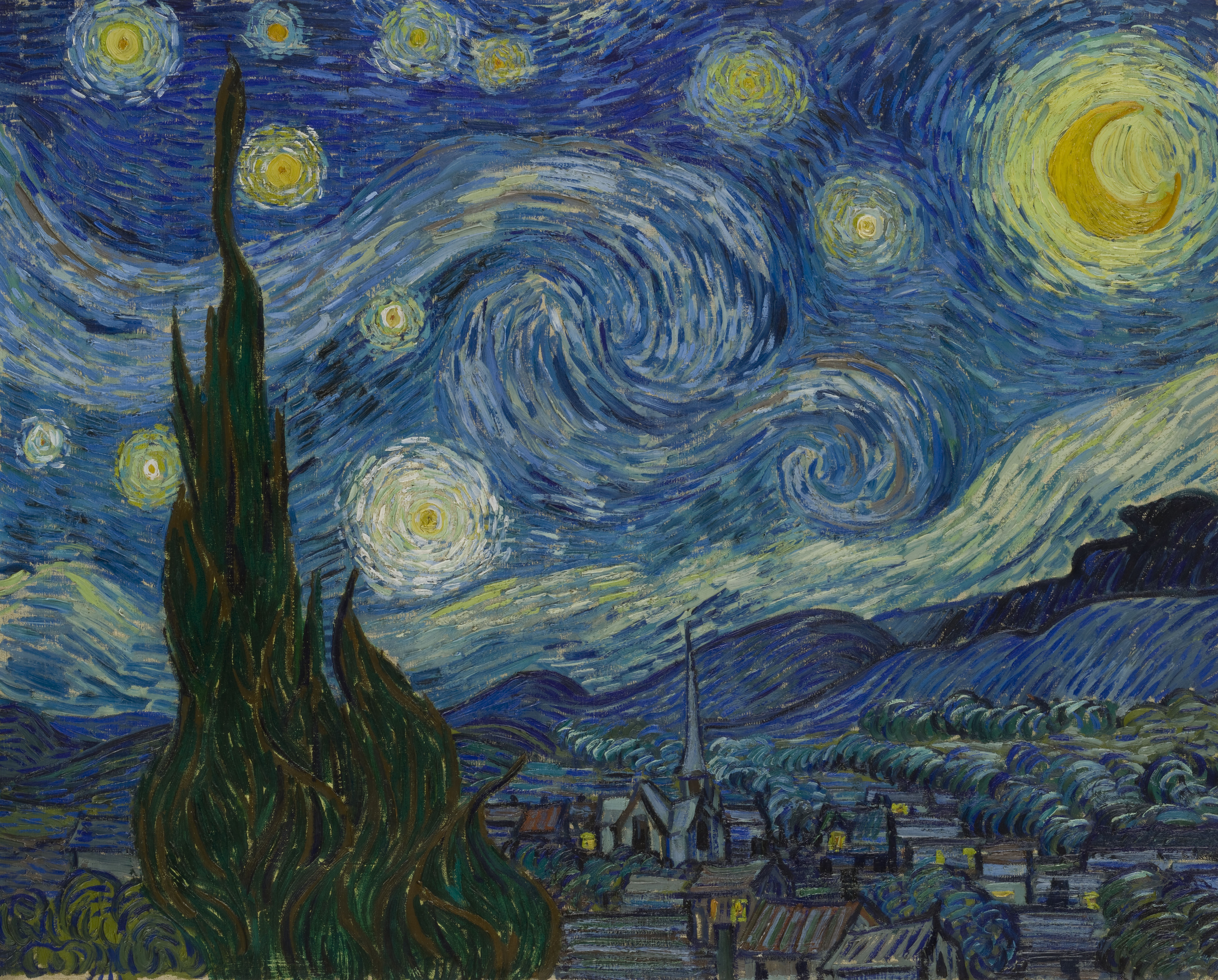
Digital image © The Museum of Modern Art/Licensed by SCALA / Art Resource, NY 1. d00127853 ART161946  Gogh, Vincent van (1853-1890). The Starry Night. Saint Rémy, June 1889. Oil on canvas, 29 x 36 1/4

Digital image © The Museum of Modern Art/Licensed by SCALA / Art Resource, NY 1. d00127853 ART161946 Gogh, Vincent van (1853-1890). The Starry Night. Saint Rémy, June 1889. Oil on canvas, 29 x 36 1/4″ (73.7 x 92.1 cm). Acquired through the Lillie P. Bliss Bequest.

Even as he wrestled with his own darkness, Vincent van Gogh craved the colors of light. His most famous painting, The Starry Night, explodes with yellow, orange, and blue stars swirling into a golden glob of a crescent moon. Within that frame, this masterpiece hangs as the iconic poster for dark night-sky preservation efforts around the globe.

But easily missed in the painting is the anchoring scene beneath the wild night sky. Soft yellow light spills from village windows, reaching for and consumed by the heavens blazing above. It is a relationship Van Gogh depicted time and again: human light co-existing with natural light, but far from its equal.

It is a theme threaded into the multilayered light of Van Gogh’s works. In the 2008 book “Van Gogh and the Colors of the Night,” published in conjunction with the exhibition of the same name at The Museum of Modern Art in New York City and the Van Gogh Museum in Amsterdam, art historian Joachim Pissarro describes the representation of “crepuscular and nocturnal reality” found throughout Van Gogh’s works.

Pissarro, great-grandson of Impressionist painter Camille Pissarro, a Van Gogh contemporary, explains that Van Gogh’s relationship with twilight and night dated back to 1878, when he first sketched a night café scene.

Pissarro, as adjunct curator in MoMA’s Department of Painting and Sculpture, wrote that “Van Gogh was fascinated by this dual and paradoxical moment: the fading of daylight, culminating in an intense though short-lived sunset, followed by the fall of darkness and then by the emergence of focal points of artificial light and the scintillation of stars and moon against the night sky.”

This same duality is observed in other Van Gogh works, such as The Cottage, in which a single, tiny flame is seen through the window, and Terrace of a Café at Night (both seen below).

The Cottage © The Van Gogh Museum, Amsterdam (Vincent van Gogh Foundation) Nuenen, May 1885. Oil on canvas, 65.7 cm x 79.3 cm. A recurrent theme throughout Van Gogh’s work is that of cottages as “human nests.” Hence, the Van Gogh Museum’s online description of this painting: “The cottage looks like a nest, built using whatever came to hand. … Light glows through the glass, creating a sense of warmth and safety.”

The Cottage © The Van Gogh Museum, Amsterdam (Vincent van Gogh Foundation)
Nuenen, May 1885. Oil on canvas, 65.7 cm x 79.3 cm.
A recurrent theme throughout Van Gogh’s work is that of cottages as “human nests.” Hence, the Van Gogh Museum’s online description of this twilight painting: “The cottage looks like a nest, built using whatever came to hand. … Light glows through the glass, creating a sense of warmth and safety.”

Terrace of a Café at Night (Place du Forum) © Stichting Kröller-Müller Museum, Otterlo, The Netherlands Arles, France, circa September 16, 1888. Oil on canvas, 80.7 x 65.3 cm. “On the terrace, there are little figures of people drinking. A huge yellow lantern lights the terrace, the façade, the pavement, and even projects light over the cobblestones of the street, which takes on a violet-pink tinge. The gables of the houses on a street that leads away under the blue sky studded with stars are dark blue or violet, with a green tree. Now there’s a painting of night without black. With nothing but beautiful blue, violet and green, and in these surroundings the lighted square is coloured pale sulphur, lemon green.” From Van Gogh’s September 1888 letter to his sister Willemien

Terrace of a Café at Night (Place du Forum) © Stichting Kröller-Müller Museum, Otterlo, The Netherlands
Arles, France, circa September 16, 1888. Oil on canvas, 80.7 x 65.3 cm.
“On the terrace, there are little figures of people drinking. A huge yellow lantern lights the terrace, the façade, the pavement, and even projects light over the cobblestones of the street, which takes on a violet-pink tinge. The gables of the houses on a street that leads away under the blue sky studded with stars are dark blue or violet, with a green tree. Now there’s a painting of night without black. With nothing but beautiful blue, violet and green, and in these surroundings the lighted square is coloured pale sulphur, lemon green.”
—Excerpt from a September 1888 Van Gogh letter to his sister Willemien

In September 1888, shortly after completing Terrace of a Café at Night in Arles, France, Van Gogh amplified his vision of the night, carrying his equipment to a seawall overlooking the Rhône River in Arles. The 2011 biography “Van Gogh: The Life” details the genesis of this masterpiece, Starry Night over the Rhône (below), and how Van Gogh provided work light by setting up his easel under one of the gas lamps lining the seawall.

© RMN-Grand Palais / Art Resource, NY 1. S0163724 ART147119 Gogh, Vincent van (1853-1890). Starry night over the Rhone River, 1888. Arles. Oil on canvas, 72.5 x 92 cm. RF1975-19. Photo: Hervé Lewandowski. Musée d'Orsay, Paris Shortly after completing Terrace of a Café at Night, which portrayed a corner of a night sky, Van Gogh realized his obsession of painting a color-driven, starry night. “Next came this view of the Rhône in which he marvellously transcribed the colours he perceived in the dark,” Musée d'Orsay curators write in their online description of Starry Night over the Rhône: “Blues prevail: Prussian blue, ultramarine and cobalt. The city gas lights glimmer an intense orange and are reflected in the water. The stars sparkle like gemstones.”

© RMN-Grand Palais / Art Resource, NY 1. S0163724 ART147119
Gogh, Vincent van (1853-1890). Starry night over the Rhone River, 1888. Arles.
Oil on canvas, 72.5 x 92 cm. RF1975-19. Photo: Hervé Lewandowski.
Musée d’Orsay, Paris
Shortly after completing Terrace of a Café at Night, which portrayed a corner of a night sky, Van Gogh realized his obsession of painting a color-driven, starry night, using gaslight to help him paint on location outdoors in the dark. “Next came this view of the Rhône in which he marvellously transcribed the colours he perceived in the dark,” Musée d’Orsay curators write in their online description of Starry Night over the Rhône: “Blues prevail: Prussian blue, ultramarine and cobalt. The city gas lights glimmer an intense orange and are reflected in the water. The stars sparkle like gemstones.”

As “Van Gogh: The Life” authors Steven Naifeh and the late Gregory White Smith wrote, Van Gogh focused on the ultimate subject, the night sky, while also paying heed to the play of light on the city and river. The “ruthless reflections” of gas lanterns on the Rhône, as Van Gogh termed the effect, were captured in hundreds of short strokes.

In “Van Gogh and the Colors of the Night,” art historians Maite van Dijk and Jennifer Field describe how this painting “combined the complex light effects and reflections of gas- and starlight into a compelling representation of the infinite night sky.”

The erudite Van Gogh was light years ahead of his time, blending his love of art, literature, religion, astronomy, nature, and topography to map out a new vision of the cosmos, the human existence below, and a keener understanding of how light and color play out during the Earth’s 24-hour day-night cycle.

But 125 years after Van Gogh’s death, our relationship with light has precariously reversed. Never have we seemed so hell-bent on separating ourselves from the heavens by draining the world of darkness. Never has the Earth glowed with so much electric light. Never has exposure to light at night posed such a threat to our health, with the disruption of our biological clocks and melatonin production increasing the risks of cancer and other diseases and disorders.

And never, comes the twist, has light offered such incredible potential to heal, to energize, to inspire, to protect, to guide, to stimulate, and to soothe.

In the spirit of Van Gogh, whose canvases wore the colliding colors of day, dusk, and night, I relay the warning from scientific researchers and dark night-sky advocates: Excessive and overly bright electric light at night is threatening our health, disrupting ecosystems, and separating us from our cosmic cultural heritage.

Generations of children are growing up having never seen the Milky Way. But at its most effective, the discussion joins dark and light: not as mortal enemies, but as symbiotic twins. For the conversation to be life changing for the masses, many of whom have never witnessed a star-studded sky, it maintains a focus on heaven and Earth, where an extraordinary story is taking shape:

From the testing of astronaut-friendly LEDs for the International Space Station to the fast-growing field of daylighting design, a global group of diverse experts is teaming for a multidisciplinary exploration of light that offers solutions for the challenges to our physical, mental, social, and creative wellbeing.

It’s easy to envision Van Gogh as a part of this exploration. As Joachim Pissarro once told me in a phone interview, Van Gogh likely would not be a painter if he were alive today. Rather, says Pissarro, Bershad Professor of Art History and director of the Hunter College Art Galleries in New York City, Van Gogh would be ahead of the game. His insatiable drive and vision most likely would propel him into new ventures, perhaps as a video or digital artist in emerging technological fields.

And undoubtedly, the space-station/rocket-science component of light research for astronauts would please Van Gogh, a connoisseur of literature who counted a 19th-century contemporary, science-fiction writer Jules Verne, among his favorites.

The Eye’s Nonvisual System

Photo courtesy of NASA Identifier: 420686main_4 Researchers around the world are following the rocket science of lighting technology: the astronaut-friendly LED lighting being developed and tested for the International Space Station. “If it’s good enough for the space station,” says circadian neuroscientist Steven W. Lockley, “it’s good enough for your house.”

NASA Identifier: 420686main_4
In the accelerating world of electric and natural light research, most fascinating of all is the rocket science of lighting technology: the astronaut-friendly LED lighting system being developed and tested for astronauts aboard the International Space Station. “If it’s good enough for the space station,” says circadian neuroscientist Steven W. Lockley, “it’s good enough for your house.”

Scientists’ journeys are a never-ending process of discovery. And the findings don’t get any bigger than that of a new photoreceptor system in not just the human eye, but in the eyes of all mammals.

As I have learned from my interviews with numerous scientists over the past three years, the most exciting new frontier in light research has to do with this photoreceptor system: the eye’s nonvisual system, which performs the critical job of detecting the wavelengths of light that drive our biology and behavior through the resetting of the master 24-hour — the circadian — clock in the brain.

Circadian neuroscientist Steven W. Lockley explains: Unlike the visual system, this non-image-forming system provides a measurement of environmental light-dark cycles. It tells the brain whether it’s night or day, or winter or summer, which the brain uses to control our daily and seasonal biology.

The workings of this nonvisual system are shaping health and light research around the globe, from medical technology in hospital and healthcare settings, to lighting for professional athletes and sports team facilities, to comfort in our homes.

And then, most fascinating of all, there’s the rocket science of lighting technology: the astronaut-friendly LED lighting being developed and tested for the International Space Station. This highly sophisticated LED wavelength technology is designed to improve astronauts’ sleep, alertness, safety, and work performances in conjunction with the nonvisual light-sensing system of the eye.

A talk I gave in August 2014 at the Better Lights for Better Nights Conference in Dripping Springs, Texas, focused on this groundbreaking research that holds huge implications for lighting applications on Earth.

The bulk of the materials for my presentation were provided by Lockley, an Associate Professor of Medicine at Harvard Medical School and a neuroscientist in the Division of Sleep Medicine and Departments of Medicine and Neurology at Brigham and Women’s Hospital; and Dr. Smith Johnston, then-director of the Aerospace and Occupational Medicine Clinics at NASA’s Johnson Space Center in Houston.

Lockley, a circadian rhythms and light researcher, is a lead adviser of LED lighting for the space station. Everywhere electric light is used, Lockley says, we can do a better job of it. “We’re at the start of a revolution for the application of light,” Lockley told me in a phone interview. “If it’s good enough for the space station, it’s good enough for your house.”